EARLY MUSIC EDUCATION · PREGNANCY TO AGE 6
One day, your child may say,
“I want to quit piano.”
Right now, they love music.
They dance when music plays. Light up when you sing. Ask for the same song again and again. Reach for the keys whenever they see a piano.
“My child loves music,” you think.
“Perhaps they have a musical gift.”

01 / THE QUESTION
They loved music.
What happened?
A few years later, that same child may begin to say, “I don’t like piano.” “I don’t want to practise.” “I want to stop.”
And you wonder: “Why? They used to love music. Did they not have the talent after all?”
Perhaps you have heard friends with older children say, “After years of lessons, they still can’t read music on their own.” “They only practise when I remind them.” “Without the teacher, they don’t know how to move forward.”
Watching your own child enjoy music now, you may wonder, “Could that happen to us, too?”
But after teaching hundreds of children, I have come to believe that a struggle with piano does not, by itself, mean a child lacks musical talent.
02 / THE STARTING POINT
Children do not begin piano
from the same musical starting point.
Some sounds are already familiar.
Some children can hear differences between notes and sing back what they hear.
Some connections are already there.
Some feel rhythm in their bodies, connect sounds with note names, and are familiar with written music.
Some can already find a sound.
Some recognise where a note belongs on the keyboard. Others sit at a piano for the first time with very little of this experience.
Even at the same age of six, children bring different experiences to their first lesson. Their musical starting point begins taking shape before they start an instrument.
03 / WHAT 30+ years TAUGHT ME
I did not always
think this way.
For 30+ years, I have taught piano and music to children with very different beginnings.
Children who first started after six. Children who began around three. Children whose families had made music part of life since pregnancy.
At first, I thought, “I just need to find a better way to teach.”
If a six-year-old did not understand, I looked for a better explanation. If reading music was difficult, I made the materials clearer. If rhythm was a struggle, I found a simpler way in.
I revised the materials. Changed the sequence. Changed the way I taught.
Still, some differences remained.
In my teaching, I often noticed that children who had built foundations earlier approached new musical ideas differently. For some, learning felt less like memorising something unfamiliar and more like recognising something already familiar.
These are observations from my experience, rather than proof that starting at a particular age causes a particular outcome.
They led me to a realisation:
What I needed to change was not simply how I taught a child at six.
It began earlier.
04 / FIRST, PREPARE THE SOIL
If you want something to grow,
begin with the soil.
Even a good seed struggles in hard, dry soil.
In rich soil, it can put down roots, take in water, and grow towards the light.
I began to see children’s music in the same way.
More practice. More explanation. More things to remember. Before asking for all of that, we can prepare the soil in which music grows.
Listening. Singing. Rhythm. Sounds and their names. Written notes. The keyboard.
When these become connected through familiar experiences, children have more to draw on as they learn an instrument.
Before the instrument, build the foundation.
We do not start music at six. We prepare it to bloom by six.
05 / THE EAR COMES FIRST
Before the instrument,
the ear.
That is why I took Misosofi’s starting point back to pregnancy: preparing a musical home, with listening at its heart.
The aim is not to make a baby perform or memorise. Expectant parents can begin preparing the environment and habits they want to share with their child.
In Misosofi, developing the ear means more than having music playing in the background. It means helping a child attend to sound and, as they become ready, connect pitch with note names: “This is Do.” “This is Mi.”
Absolute Pitch, often called Perfect Pitch, is a core part of Misosofi. We intentionally nurture the connection between a heard pitch and its note name, within a wider musical foundation. Individual development varies; Absolute Pitch is not a guaranteed outcome.
Recognising a sound, singing it, and later finding it on an instrument can create small moments of understanding: “I know that sound.” “I can find it.”
Those moments can invite the next: “I want to try again.”
06 / THE MISOSOFI PHILOSOPHY
Begin with the ear.
Let reading catch up.
At first, the ear leads.
Reading follows.
A child does not need to wait until they can read music before they begin to play.
First, they listen. They sing. And very early, they begin to experience those sounds at the keyboard.
At the same time, rhythm, theory, pitch and solfège are introduced through the ear — by listening, singing, copying and moving.
Then, little by little, written music is introduced. A symbol begins to connect with a sound they already know. A note on the page begins to connect with a note they have already sung and played.
As the child grows, the gap gradually becomes smaller. They begin to read what they can already hear. Then they begin to play while reading. And eventually, both skills work together.
Listen → Sing → Play
Listen → Imitate → Understand
See → Read → Play while reading
The timing is not the same for every skill. That is intentional. These are overlapping strands, rather than stages that must each be completed before the next can begin.
The aim is to play by ear and to read music, understand its sound internally, and play from the page.
We strengthen each ability when the child is developmentally ready for it — while allowing the ear to lead the way.
07 / LET THEM BEGIN WITH A FOUNDATION
At six, do not ask your child
to carry it all.
Pitch. Rhythm. Reading music. The keyboard. Fingers. Two hands. A child starting piano may be meeting all of these for the first time.
When it is difficult, we say, “You need more practice.” When progress is slow, “Try harder.” But there are things we can prepare before that first lesson.
Perhaps you took piano lessons yourself. At first, it was fun. Then practice became a chore, reading music felt difficult, and eventually you stopped.
Now, watching your child enjoy music, you may think, “I don’t want them to go through the same thing. I don’t want them to lose this love of music.”
Before that day,
there is something you can do.
Create experiences that fit your child now: at infancy, at one, at two, at three, and as they grow. Small, familiar encounters with music can come before more demanding tasks.
Six is a focus for this program, not a deadline for musical learning. Children develop differently, and learning can continue throughout life.
08 / IMAGINE THEIR BEGINNING
What if the first lesson
felt familiar?
The teacher plays a note. “I know that.” Your child tries singing it back.
A rhythm feels familiar. Notes on a page begin to connect with sounds. The keyboard offers places to find those sounds.
Imagine having those experiences to build on, leaving more room over time for touch, tone, phrasing, and expression.
One day, a teacher may say, “Your child has a musical gift.”
You will know how many small moments helped it grow. You listened together. Sang together. Moved to rhythm. Explored sounds, notes, and keys.
You gave that musical interest
soil in which to grow.
09 / YOUR ROLE AS A PARENT
You do not have to
become the teacher.
You do not need to play piano, know music theory, or have Perfect Pitch yourself.
Your role is to prepare an environment where your child can explore music.
But “prepare the environment” can leave you with more questions. What should we do? When? How much? In what order?
That is why I created a system to guide your next step.
Misosofi Method · Prenatal to Age 6
The purpose is to build the foundation before formal instrument study, so that everything does not have to be new at once at six. Early keyboard exploration is part of this foundation, rather than a race to perform.
From pregnancy to around age six, Misosofi brings together the ear, Absolute Pitch, singing and solfège, rhythm, musical understanding and theory, note reading, keyboard connection, and playing. These abilities develop alongside one another: the ear leads, playing begins early, and reading is gradually introduced and brought into connection with what the child can already hear and play.
10 / FROM ROADMAP TO YOUR CHILD’S NEXT STEP
A map shows the way.
Your child needs a starting point.
The free Roadmap shows what to nurture from pregnancy to six. Your next question is, “What should my child do now?”
“My child is not singing yet—is that okay?” “Are we ready for the next note?” “They cannot copy this rhythm.” “When do we introduce the keyboard?” “Is written music too early?”
Every family encounters different questions.
The ROADMAP shows you what should be developed from pregnancy to age six.
MISOSOFI shows you where your child is now — and what to do next.
Parents do not need to understand the entire method before they begin. They need to know what to do next.
Current stage → What to do now → When to move on
Start with what fits your child. Check how it is going. Let each ability progress when they are ready, revisiting earlier experiences when needed.
Personal guidance helps you bring this system into your own home.
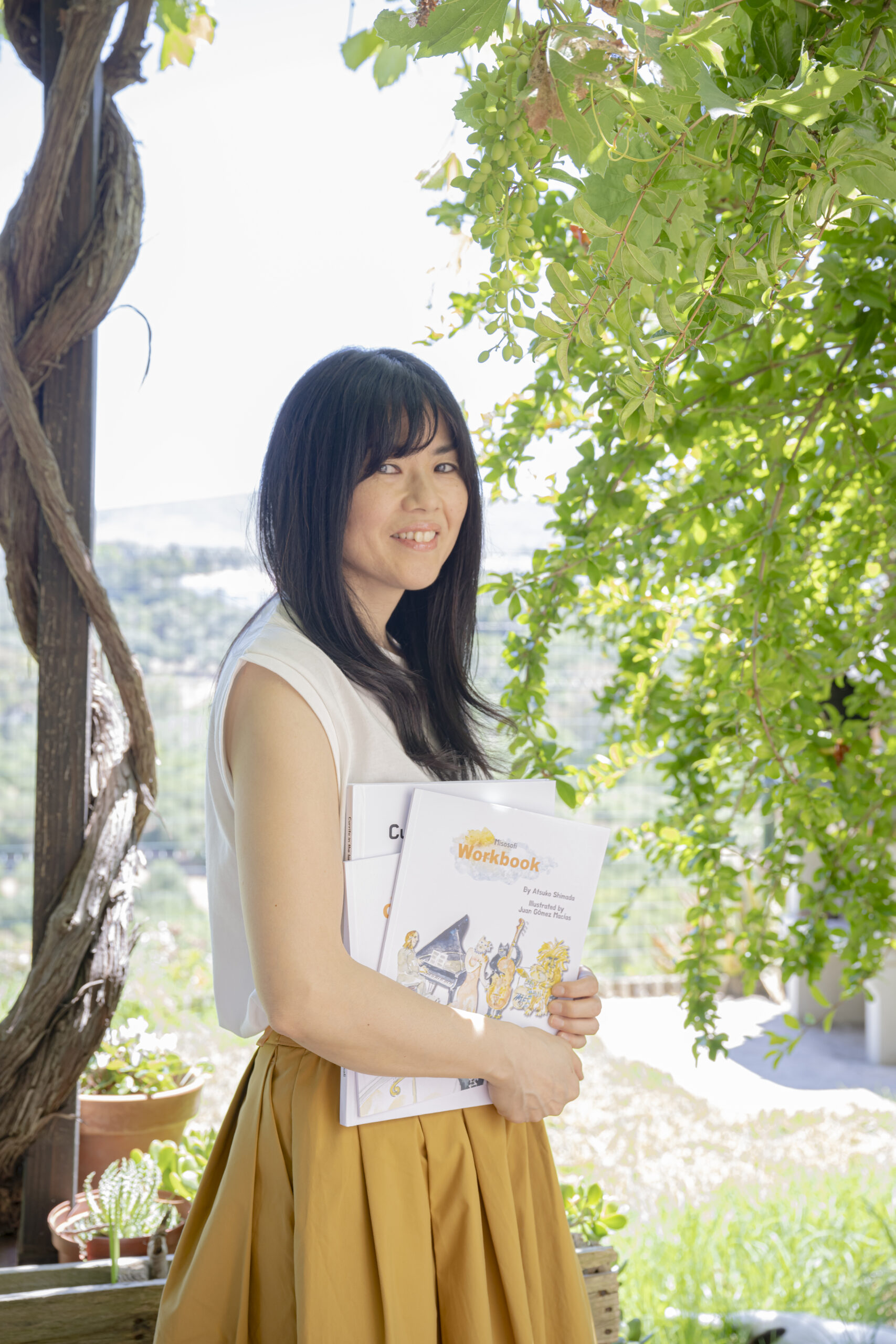
Founder of Misosofi Method · Music Educator · 30+ Years
12 / MEET ATSUKO
Experienced teaching.
A foundation-first approach.
After 30+ years of teaching children, Atsuko realised that the question reached beyond how to teach at six. The foundations that came earlier mattered. She created Misosofi to help families nurture those foundations at home.
- Berklee College of Music — Summa Cum Laude
- Former Yamaha Music InstructorSelected through a competitive certification process.
- 30+ years in music educationExperience brought to the earliest stages of musical learning.
13 / STUDENT & PARENT EXPERIENCES
Music that stays with them.
Reflections from a student and a parent on learning with Atsuko.
A STUDENT’S PERSPECTIVE
Growing up with music.
A student who began lessons at four reflects on singing while playing, recognising notes by ear, and a lasting love of the piano.
Watch on YouTube ↗A PARENT’S PERSPECTIVE
A love of music, shared.
A parent of two piano students describes Atsuko’s listening-focused teaching and the enjoyment and appreciation of music their children developed.
Watch on YouTube ↗These accounts describe individual experiences of Atsuko’s teaching, rather than reviews of the Misosofi Program. Musical development varies; Perfect Pitch is not guaranteed.
A FEW QUESTIONS
Before the next step.
Do I need to be a musician?
No. Your role is to prepare a musical environment and follow the next step that fits your child. You do not need to become a piano teacher.
Can we begin during pregnancy?
Yes, by preparing for a musical family life. Misosofi does not promise prenatal training outcomes.
Is Absolute Pitch part of Misosofi?
Yes. Intentionally connecting heard pitches with note names is a core focus. Individual development varies, and Absolute Pitch is not guaranteed.
Does reading come before playing?
The ear leads. Children listen, sing and begin exploring sounds at the keyboard early. Reading is gradually introduced and brought into connection with familiar sounds and playing.
Is six a strict deadline?
No. Pregnancy to around age six is the focus of this approach. Musical learning continues throughout life, and each child’s development guides the next step.
DISCOVER THE METHOD IN PRACTICE
A foundation is the beginning.
See how we bring it home.
Explore what Misosofi develops, how the abilities connect, and how your family can find a starting point.
See How Misosofi Works ↗